

Meet Dr. Xiaoxia Song, PH.D., at Banyan Behavioral Health in Burlingame, CA
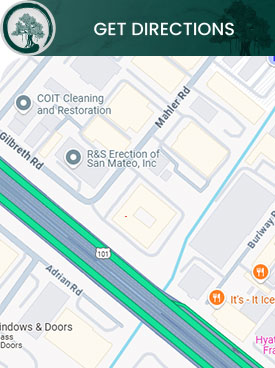
Dr. Xiaoxia Song, Ph.D., is a dedicated professional at Banyan Behavioral Health. With extensive expertise in behavioral health, she provides specialized care to individuals seeking support for various mental health challenges. Dr. Xiaoxia Song is committed to offering evidence-based treatments that promote lasting well-being and personal growth. For more information, contact us or request an appointment online. We are conveniently located at 877 Mahler Road, Suite 160, Burlingame, CA 94010.
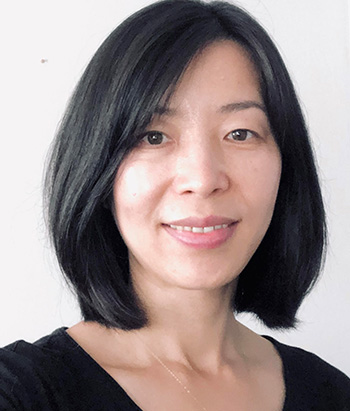
Dr. Xiaoxia Song, PH.D
Licensed Clinical Psychologist (PSY31548)
Speaks Mandarin
(She/her/hers)
Table of Contents:
Where did Dr. Song receive specialized training in trauma and Internal Family Systems?
What research experiences does Dr. Song have?
Dr. Xiaoxia Song earned her doctorate in clinical psychology at Ohio University. She received her internship training at the University of Texas at Austin. Dr. Song had experience working in a variety of clinical settings, including an inpatient psychiatric hospital, community mental health clinics, and a substance use residential program. She has experience working with a broad range of presenting concerns, including severe mental illness. Dr. Song received the IFS-I & II training and complex trauma training level I & II certificates.
In addition to her work at Banyan Behavioral Health, Dr. Song is a staff psychologist at the University of California, Berkeley, Counseling and Psychological Services.
-Areas of clinical expertise or specialization, or interest
Dr. Song’s approach to therapy is integrative but mostly trauma-based, attachment-based, relational, Internal Family System (IFS), relational, somatic, and psychodynamic. Particularly, Dr. Song is interested in complex trauma/developmental trauma.
In addition, Dr. Song pulls from other modalities, including cognitive behavioral therapy, dialectical behavioral therapy, and acceptance and commitment therapy, to facilitate slowing down, stepping into the depth of clients’ experience to heal, and bringing about lasting transformation. Dr. Song strives to provide clients a safe space to increase awareness and discover new aspects of themselves. The core of her work is in helping people connect with their fragmented parts of self and live more authentically and with purpose and meaning.
Dr. Song also spends some of her time doing research. Her research interests focus on psychotherapy process and outcome, help-seeking behaviors, etc. Dr. Song studies factors such as therapist factors, clients’ factors, and therapist-patient matching factors that contribute to the healing process.
What are Dr. Xiaoxia Song’s educational qualifications?
EDUCATION
∙ Doctor of Psychology (Clinical Psychology)
Ohio University
∙ Master of Science (General Psychology)
Palo Alto University
∙ Master of Art (Applied Psychology)
East China Normal University, Shanghai, China
∙ Bachelor of Art (Sports Management)
Wuhan Institute of Physical Education, Wuhan, China
What areas of expertise does Dr. Xiaoxia Song specialize in?
EXPERTISE
∙ Complex trauma, development trauma
∙ Mood disorders (i.e., anxiety, depression)
∙ Relationship issues
∙ Eating disorders
∙ Immigration issues
What publications has Dr. Xiaoxia Song contributed to?
PUBLICATIONS
∙ Song, X., T. Anderson, T. Lin, & Y. Fang. (2023). The effects of a multimedia intervention on
help-seeking process with a Chinese college student sample, Journal of Clinical Psychology.
∙ Song, X., Anderson, T., Jiang, Y., Himawan, L., McClintock, S. A., & McCarrick, S. (2019). An investigationof a cross-cultural help-seeking model with a U.S. sample and Chinese sample, Journal of Cross-Cultural Psychology, 50-1027-1049.
∙ Anderson, T., McClintock, A. S., Himawan, L., Song, X. & Patterson, C. L. (2016). A prospectivestudy of therapist facilitative interpersonal skills as a predictor of treatment outcome. Journal of Consulting and Clinical Psychology, 84, 57-66.
∙ Song, X., Anderson, T., Beutler, L. E., Sun, S., Wu, G., & Kimpara, S. (2015): Cultural adaptation in measuring common client characteristics with an urban Mainland Chinese sample. Psychotherapy Research, 24, 1-11.
∙ Anderson, T., Patterson, C.L., McClintock, A. S., & Song. X. (2013). Factorial and predictive validity of the Expectations About Counseling – Brief Form with clients seeking counseling. Journal of Counseling Psychology, 60, 496-507.
∙ Anderson, T., & Song, X. (2012). Psychotherapy inside out: What’s real is in the context. A Review of What’s inside the Session: What really happens in psychotherapy. American Psychological Association, 57, 286-288.
∙ Beutler, L. E., Harwood, T. M., Michelson, A., Song, X., & Holiman, J. (2011). Resistance. Journal of Clinical Psychology, 67, 133-142.
∙ Anderson, T., McClintock, A. S., & Song, X. (2013). Psychotherapy. In D.S. Dunn (Ed.), Oxford bibliographiesin psychology. New York: Oxford University Press.
∙ Anderson, T., McClintock, A. S., & Song, X. (2016). Psychotherapy. In D.S. Dunn (Ed.), Oxford bibliographies inpsychology. New York: Oxford University Press.
BOOK CHAPTER
∙ Lewak, R. W., Hogan, R. S., Beutler, E. L, Song, X. (2011). Applying assessment information: Decision making, patient feedback, and consultation. Integrative assessment of adult personality (3rd Ed.), (pp. 373-412). New York: Guilford Press.





 Send Text
 How May I Help You?